• A
  • A
  • A
  • ABC
  • ABC
  • ABC
  • А
  • А
  • А
  • А
  • А
Regular version of the site

News

"There are a lot of smart people at HSE University"

"There are a lot of smart people at HSE University"
We talked to the student of the "Data Science and Business Analytics" double degree programme Yunying Pei about her projects, awards, and the LSE summer school.

Large Hadron Collider: New Hadron Discovery Factory

LHC section, sector 3-4
LHCb, a collaboration of one of Large Hadron Collider experiments, including a team of HSE University researchers, has published a news piece about the discovery of new tetraquarks, which are exotic hadrons consisting of four quarks. This discovery was made possible thanks to massive data samples gathered by the LHCb experiment with the use of algorithms developed at HSE University.

International Data Analysis Olympiad IDAO-2021 Has Started

International Data Analysis Olympiad IDAO-2021 Has Started
The registration period for the International Data Analysis Olympiad (IDAO-2021) is open until March 12. The qualifying round has already begun and will run until March 31. This year, the HSE Faculty of Computer Science and Yandex are holding the Olympiad for the fourth time. This year's Platinum Partner is Otkritie Bank. The Olympiad is organised by leading data analysts for their future colleagues—early career analysts and scientists.

Math of Machine Learning Contest Now Open

Math of Machine Learning Contest Now Open
Until April 20, you can apply to take part in the Math of Machine Learning 2021 contest. The winners of the contest will be able to enrol into HSE University's Math of Machine Learning master's programme and  Skoltech's Data Science master's programme (Math of Machine Learning track) without entrance exams.

International Laboratory of Bioinformatics Opens at the Faculty of Computer Science

International Laboratory of Bioinformatics Opens at the Faculty of Computer Science
On January 25, 2021, an International Laboratory of Bioinformatics opened at the Faculty of Computer Science. The main goal of the laboratory is to determine the role of alternative DNA structures in the genome.

‘We Facilitate High-Speed Car Crashes and Study How Car Engines Work Based on Photos of Flying Debris’

Nikita Kazeev
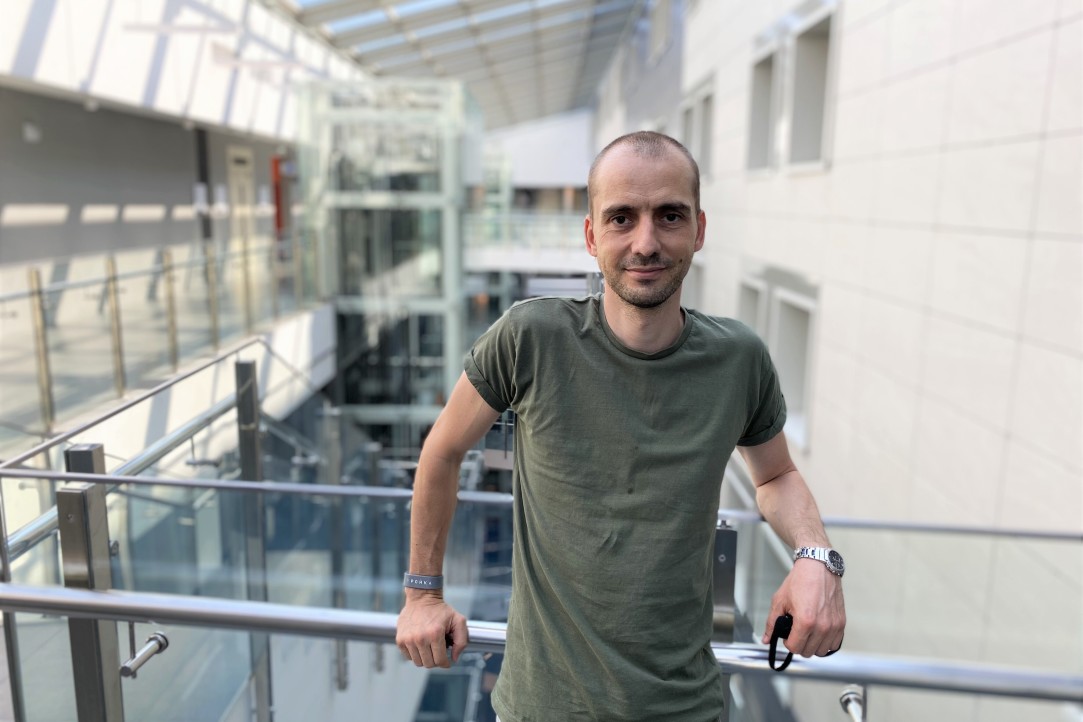
Nikita Kazeev holds a Candidate of Sciences degree (Russian equivalent of a PhD) in Computer Science and a PhD in Physics. He is a Research Fellow at the LAMBDA Laboratory and works at CERN. In an interview with HSE News Service, he talked about what it was like to defend his dissertation in a double doctoral degree programme at HSE University and Sapienza University of Rome, what it is like to conduct research in Geneva, and why it is imperative to communicate with colleagues.

‘Success of Data Science Professionals Depends on Training’

Jingtao Xu, a second-year student from China, is pursuing his Bachelor’s in Data Science and Business Analytics, a double degree programme between HSE University and the University of London. In an interview with HSE News Service, he describes the hard and soft skills he has gained at HSE, as well as the ups and downs of studying online. He also told us about his favourite places in Moscow.

HSE University Becomes the First Russian University to Confer a Doctoral Degree in Computer Science

HSE University Becomes the First Russian University to Confer a Doctoral Degree in Computer Science
Upon successfully defending his dissertation before HSE Dissertation Council in Computer Science, Pavel Dvurechensky became the first Doctor of Computer Science in Russia. This was possible thanks to the fact that, starting in 2018, HSE University received the right to award its own academic degrees.

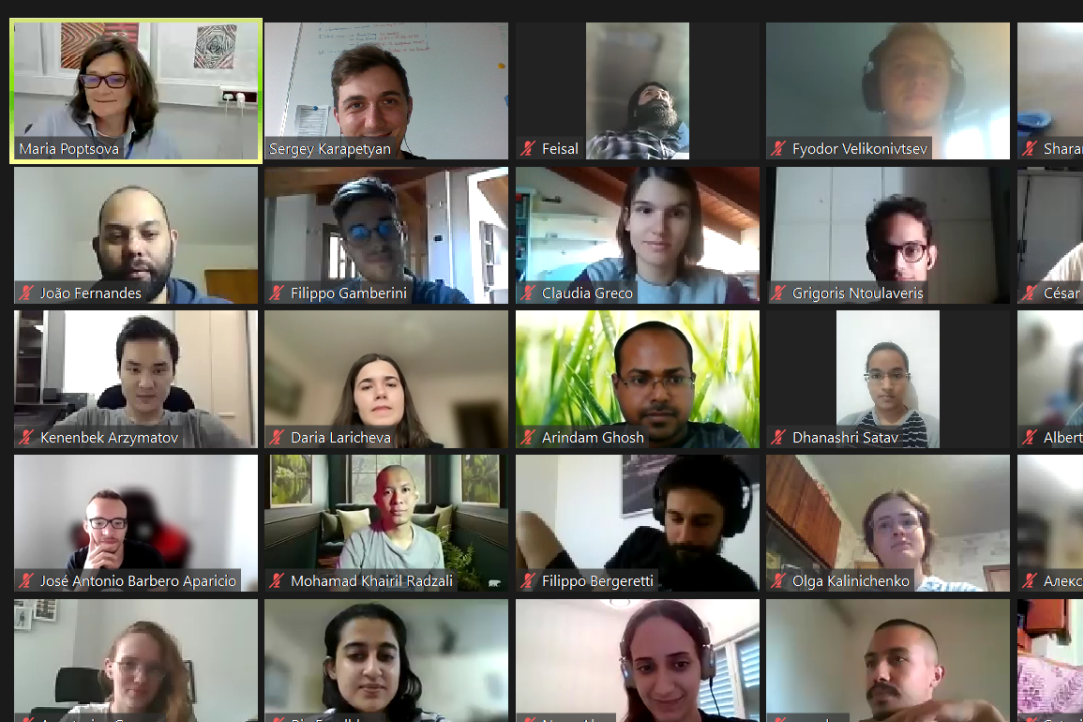
Maria Poptsova presented at the AI Journey 2020

Maria Poptsova presented at the AI Journey 2020
Maria Poptsova, head of the International Laboratory of Bioinformatics and associate professor of the Big Data and Information Retrieval School, spoke at the AI Journey 2020 conference on artificial intelligence with a presentation “Deep Learning in Genomics”.

HSE Researchers Use Neural Networks to Study DNA

HSE Researchers Use Neural Networks to Study DNA
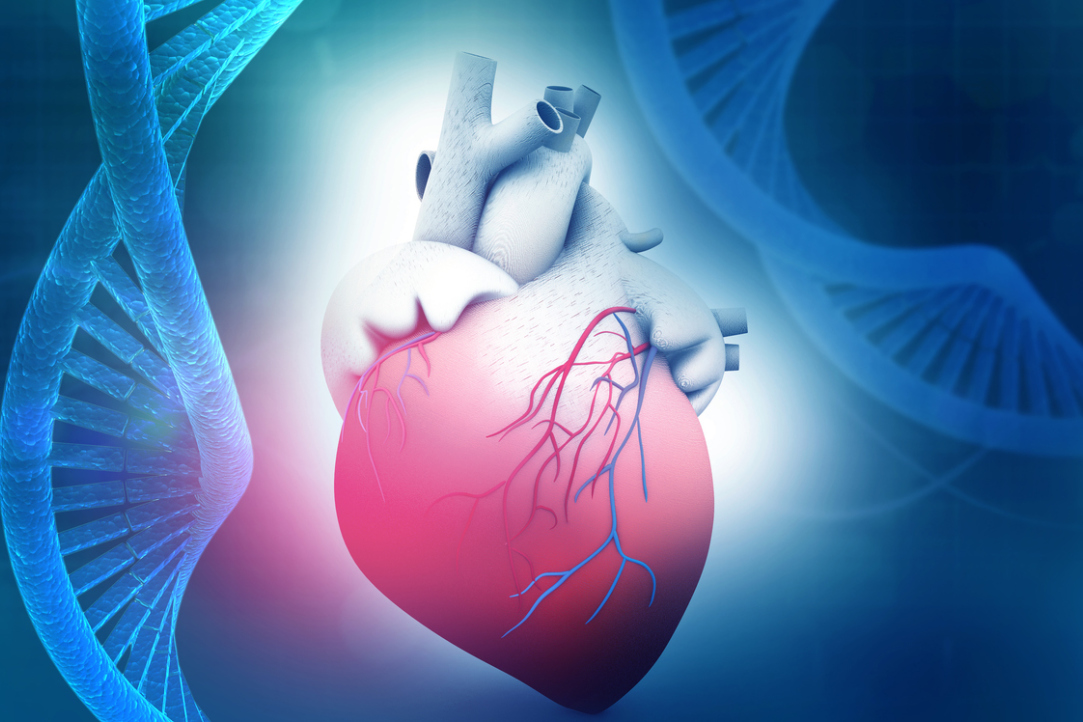
HSE scientists have proposed a way to improve the accuracy of finding Z-DNA, or DNA regions that are twisted to the left instead of to the right. To do this, they used neural networks and a dataset of more than 30,000 experiments conducted by different laboratories around the world. Details of the study are published in Scientific Reports.